
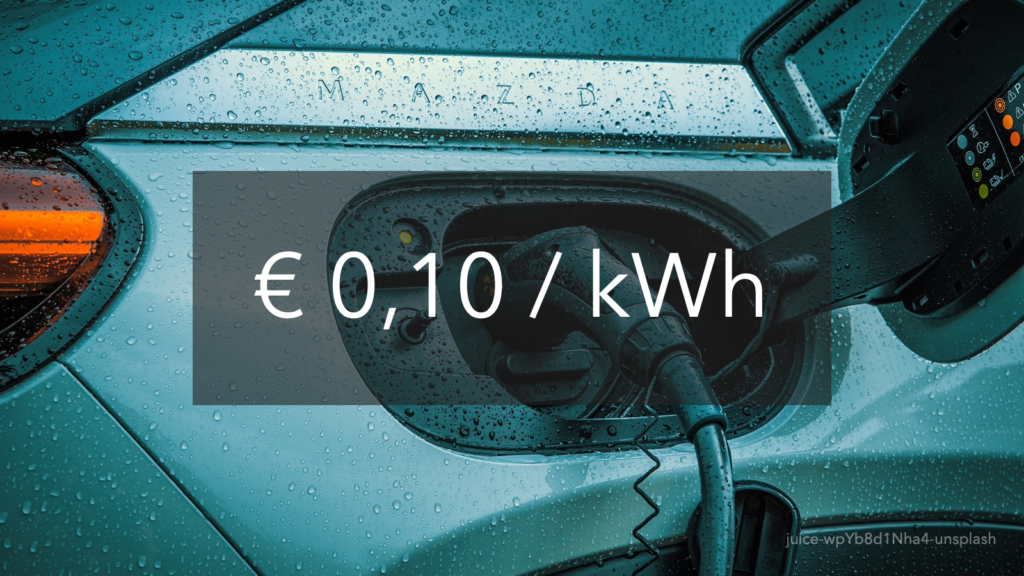
Since 1 January 2026, EV drivers in the Netherlands with a home charger can earn money through ERE certificates (Emission Reduction Units). For every kWh charged, you receive approximately €0.10 via a registered service provider. The idea is straightforward: oil companies pay, electric drivers benefit. The polluter pays, the green driver is rewarded. There is much to be said for that.
Still, at V2G Liberty we have a number of reservations about how this scheme has been designed.
What works
The principle is sound. Fossil fuel producers are obliged to contribute to the decarbonisation of transport. That money reaches people who actually drive electric. For home chargers with a MID-certified charging station, this can amount to several hundred euros per year. That is welcome, especially as tax benefits for EV drivers are being phased out.
Where it falls short
A flat incentive that doesn’t help the grid. The compensation is tied to the number of kWh charged — regardless of when or where you charge. Charging during peak hours when the grid is stressed pays the same as charging at night when there is surplus. At ~€0.10/kWh, the ERE benefit often exceeds the price differences on the day-ahead market. This undermines the incentive to charge smartly and can actually worsen grid congestion.
Bidirectional chargers are excluded. Upon enquiry, it turns out that bidirectional chargers do not qualify for ERE certificates. This is remarkable: the very technology that contributes most to grid balancing and efficient energy use is excluded. The system rewards charging kWh, not the smart deployment of them.
Complexity that reaches the wrong audience. The system requires a MID-certified charger, registration with a service provider, and annual reporting. Communication runs primarily through specialist channels such as the VER (Dutch EV Drivers Association) and LinkedIn. In practice, it is mainly technically literate, higher-educated EV drivers who benefit — not the group that still needs convincing to go electric.
Intermediaries take their cut. Service providers charge 10 to 15% of the revenue. That percentage is unrelated to your consumption: whether you charge 2,000 or 5,000 kWh per year, their effort is virtually the same. It is a percentage on top of a scheme that already carries administrative costs.
It rewards charging more, not charging smarter. The per-kWh compensation means: the more you charge, the more you receive. This incentivises driving more, not necessarily driving more sustainably. It is a subsidy on kilometres, not on emission reduction.
Compensation opportunities for the fossil industry. The oil companies purchasing EREs use them to meet their legal obligations. In effect, EV drivers facilitate fossil companies offsetting their emissions rather than reducing them.
Could it have been done differently?
The Netherlands previously had an effective instrument: reduced vehicle purchase tax (BPM) and road tax for electric vehicles. It was simple to administer, reached a broad audience, and addressed the real barrier — purchase costs. For most potential EV drivers, it is not expensive charging that holds them back, but the cost of the car itself.
A scheme that rewards smart charging rather than high-volume charging, that is time-dependent and embraces bidirectional charging, would better align with the energy transition we need.
In closing
ERE certificates are not a bad idea. The ‘polluter pays’ principle deserves support. But the current implementation misses the opportunity to incentivise smart energy behaviour, excludes innovative charging technology, and primarily benefits people who need the subsidy least. We hope the scheme evolves towards a system that does not just count kWh, but also values when and how smartly those kWh are deployed.
Note: at public charging stations, CPOs (charge point operators) register the EREs. The compensation goes to the operator — whether and how it reaches the driver is up to the CPO.